- Hydrangeas, Local Warmth, and a Relaxing Countryside Walk in Kanagawa
- Access
- What to Expect When You Arrive
- At Ajisai-no-Sato
- Mountain Views Around Ajisai‑no‑Sato
- Enjoying the Hydrangeas
- The Special “Kaisei Blue”
- Food Stalls and Floating Hydrangeas (Festival‑Only)
- Side Trip: Seto Residence
- Festival Tips (Very Useful for Foreign Residents)
- Why Kaisei Is Worth Visiting
Hydrangeas, Local Warmth, and a Relaxing Countryside Walk in Kanagawa
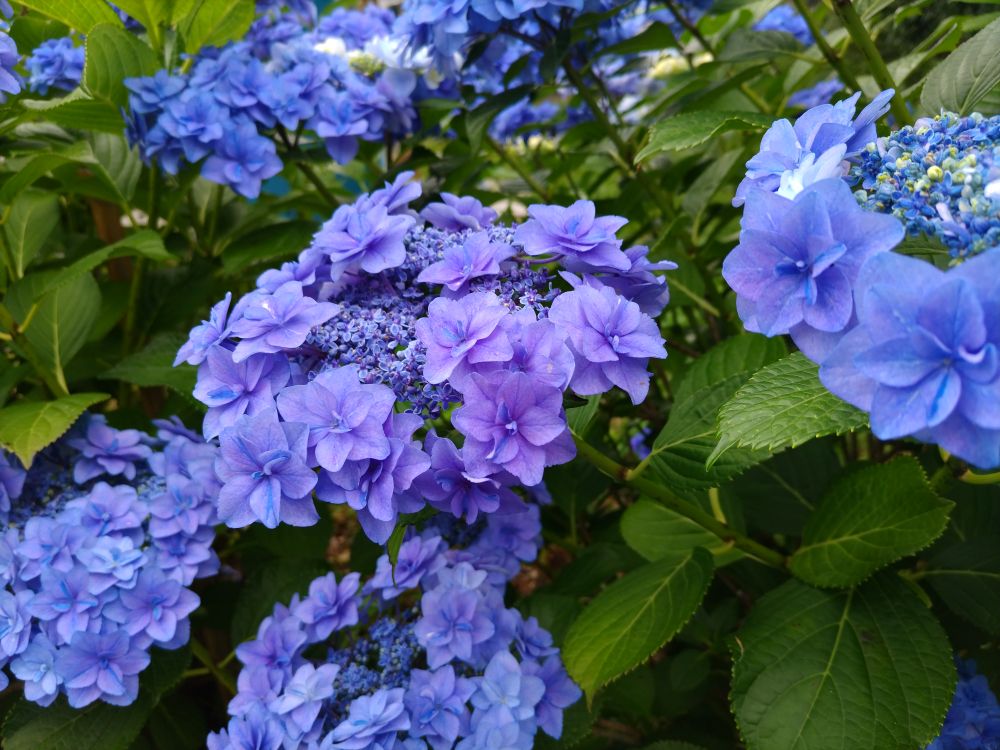
Hydrangeas—ajisai in Japanese—bloom across Japan in June, bringing soft colors to the rainy season.
Kanagawa has several well‑known hydrangea spots, but Kaisei Town, near Odawara, offers a quieter, more local experience that many foreign residents overlook.
This guide focuses on Kaisei Ajisai-no-Sato, a large hydrangea area surrounded by rice fields and tea farms.
It’s easy to visit, even if you don’t speak Japanese, and the atmosphere is warm and welcoming.
Access
During the Ajisai Festival (early June)
- Nearest station: Kaisei Station (Odakyu Line)
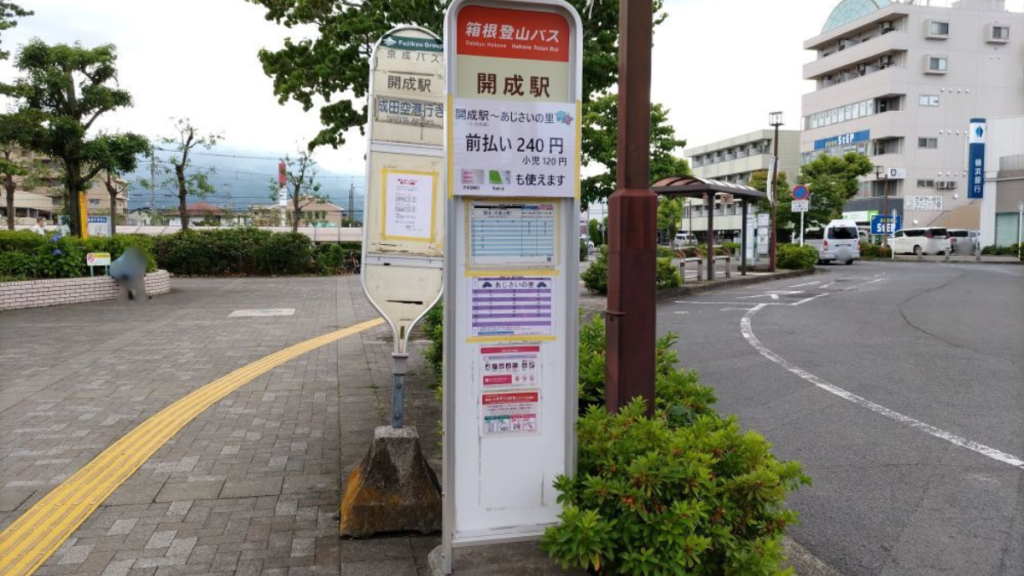
- Shuttle bus: Runs from the west exit
- Fare: 240 yen
- PASMO/Suica: Accepted
- Ride time: ~15 minutes
Outside the Festival Period
- Nearest station: Shin-Matsuda Station
- Bus: Take a Hakone Tozan Bus toward the Kaisei area
By Car
- Access: 10 minutes from the Tomei Expressway “Oi-Matsuda IC”
- Parking: Temporary parking available only during the festival
Festival dates change every year, so it’s best to check Kaisei Town’s official website before you go.
Please note that the official Kaisei Town website often updates its pages seasonally.
Hydrangea information may not be visible after the festival period, so it’s best to check again when the next season approaches.
What to Expect When You Arrive
Kaisei is known for its friendly, community-run atmosphere.
At Kaisei Station, volunteers hand out maps and greet visitors with a warm “itterasshai” (a Japanese phrase meaning “have a safe and pleasant trip”).
The shuttle bus drops you off near a temporary parking area, where more volunteers guide you toward the entrance.
At Ajisai-no-Sato
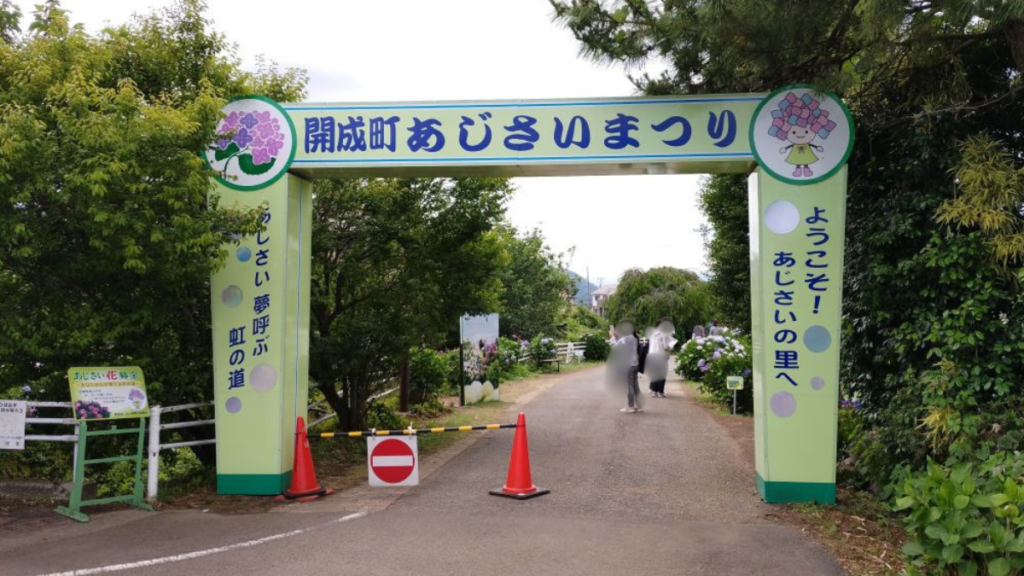
Once you pass through the entrance gate, the route naturally guides you through the main spots:
- Hydrangea fields along the rice paddies
- Tea farms with mountain views
- Ajisai Pond
- Seto Residence (a historic Edo‑period house)
The walking paths are flat, paved, and wheelchair‑friendly, making the area accessible for all ages.
Even on rainy days, the paths are easy to walk.
Mountain Views Around Ajisai‑no‑Sato
From the hydrangea paths, you can see several mountain ranges that frame the area.
The Hakone Outer Rim, the Ashigara Mountains, and the Tanzawa Mountains all appear beyond the rice fields, each with a slightly different shape and character.
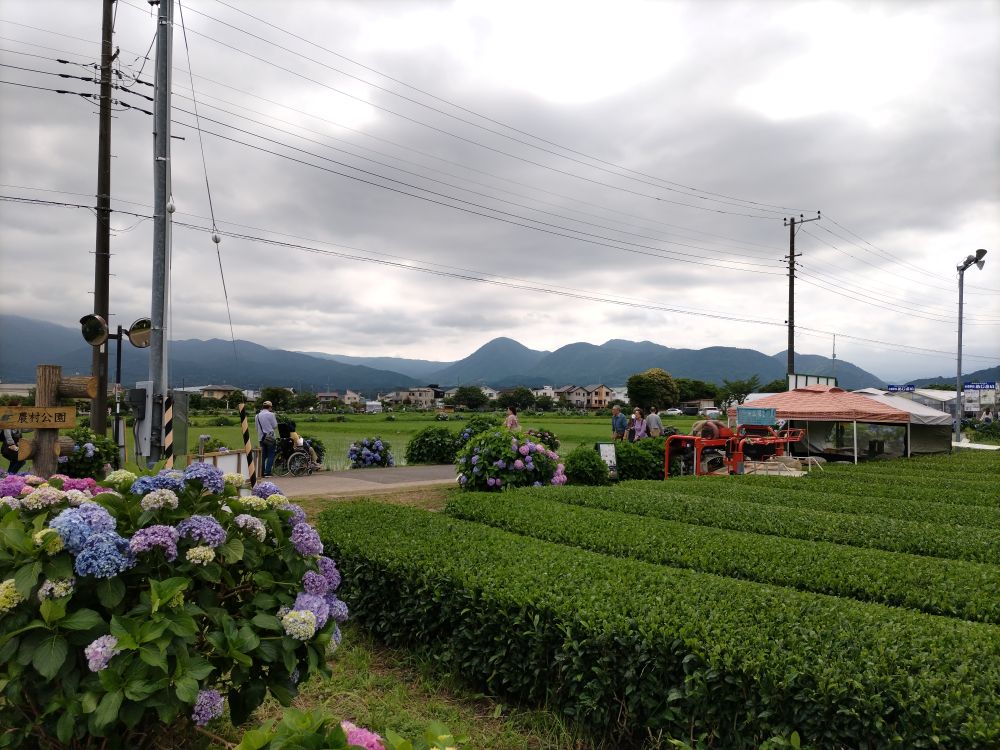
Even on cloudy days, their layered silhouettes create a peaceful backdrop—and on a clear day, Mt. Fuji can also be seen.
Enjoying the Hydrangeas
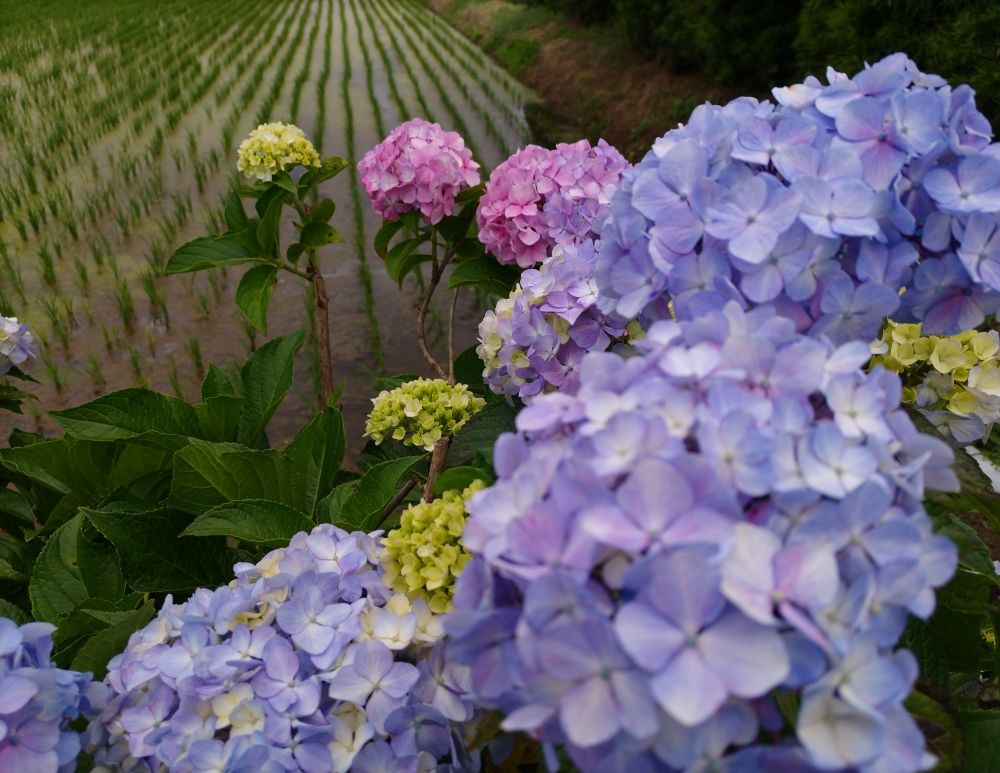
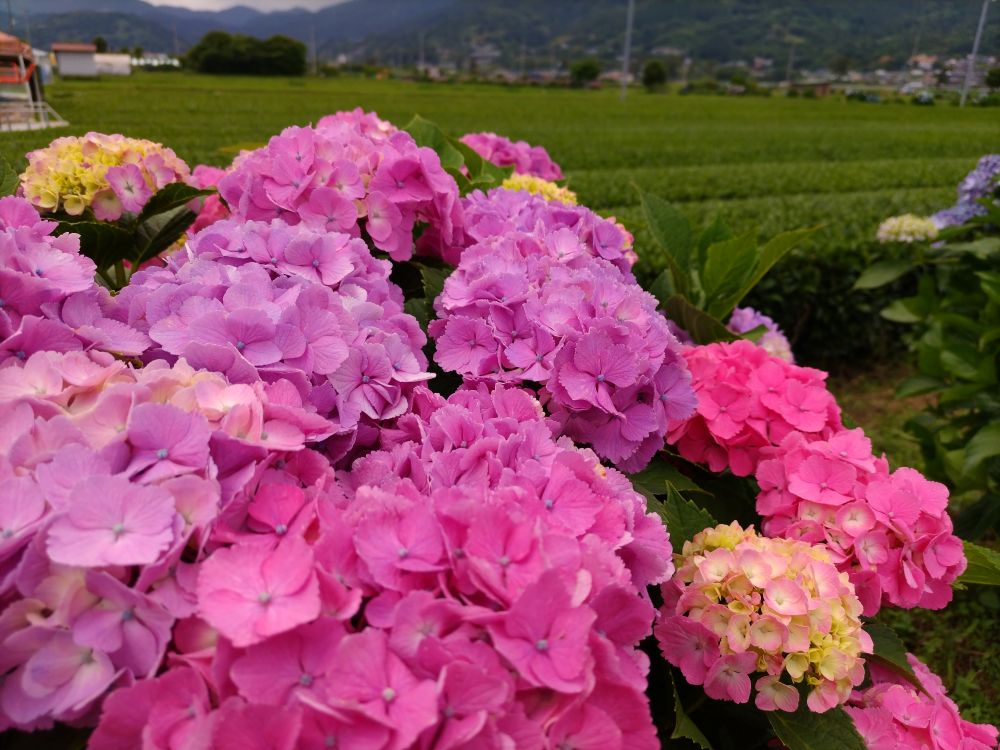
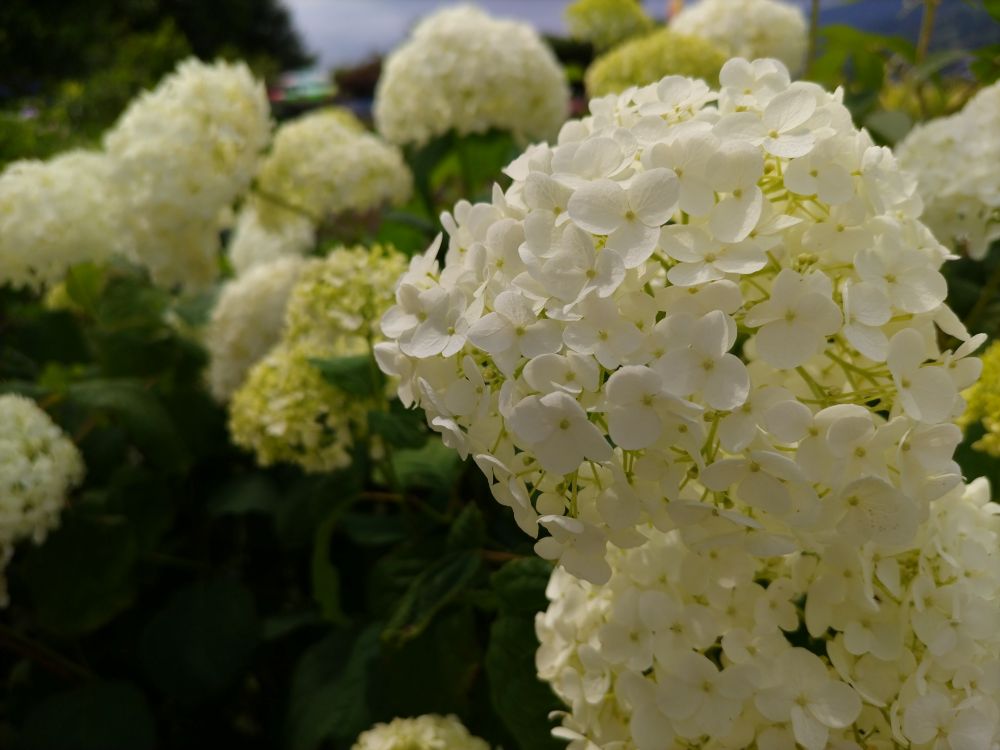
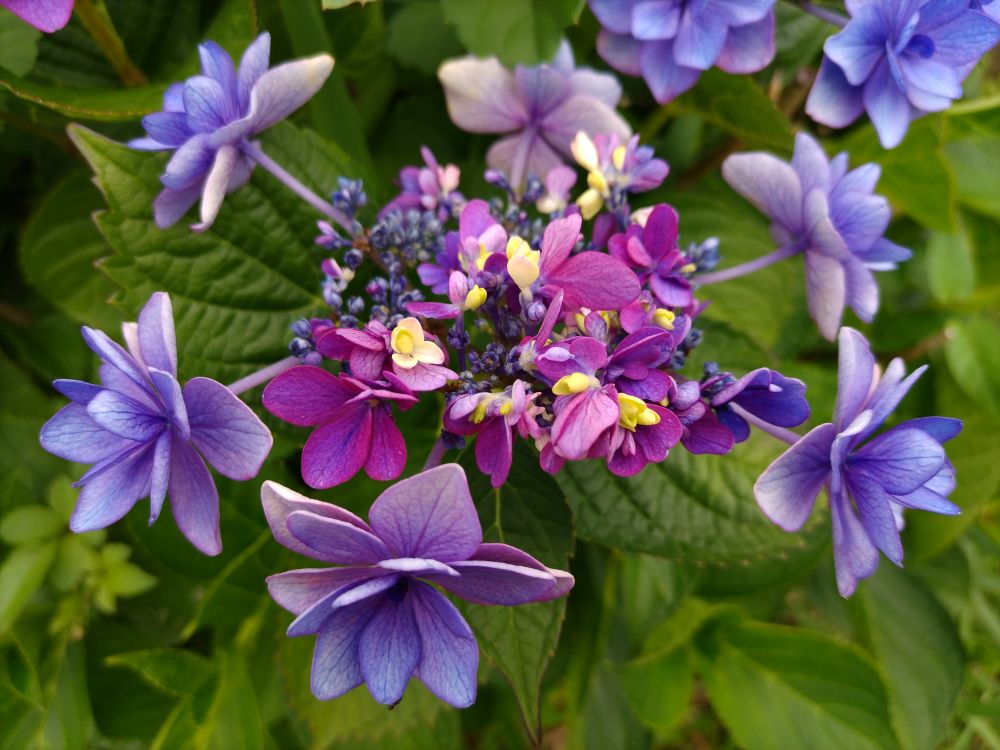
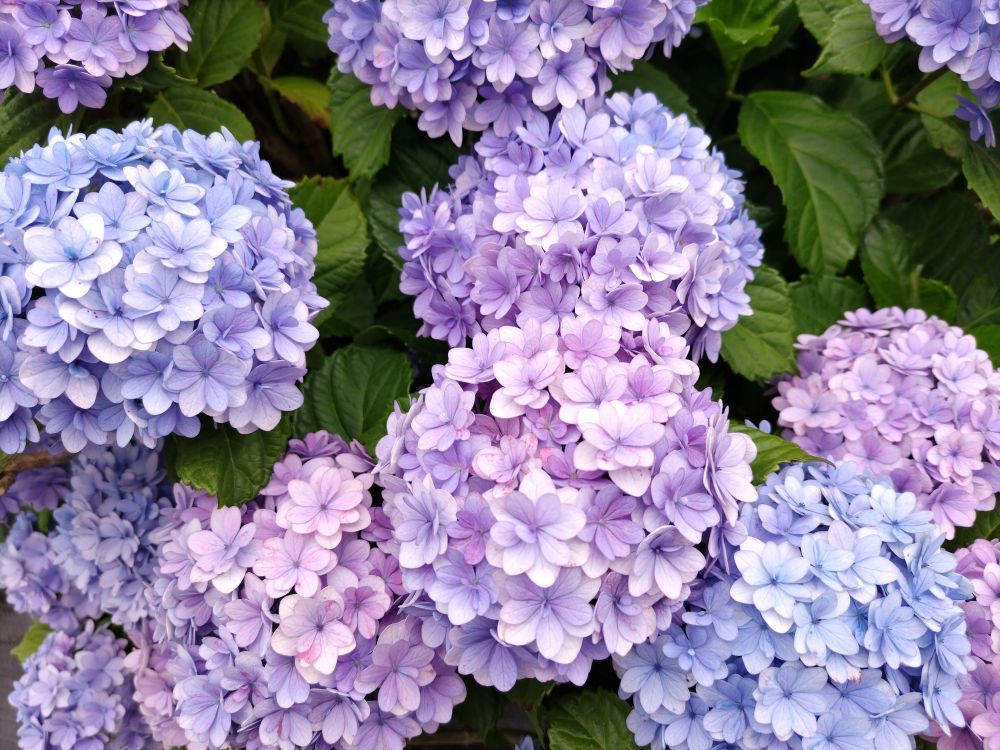
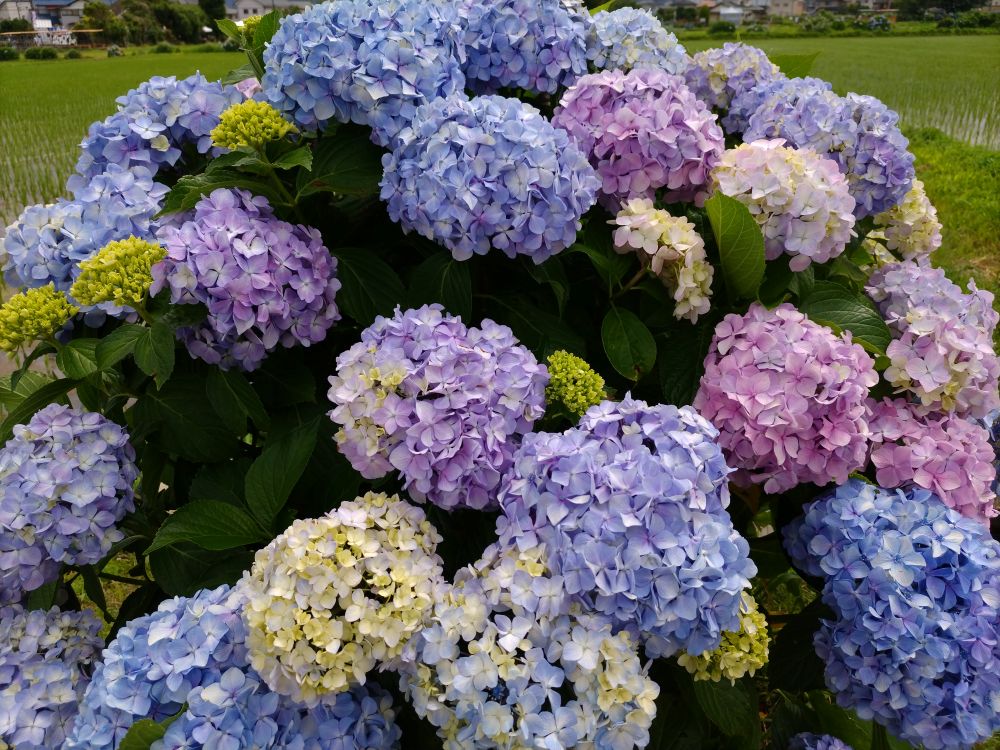
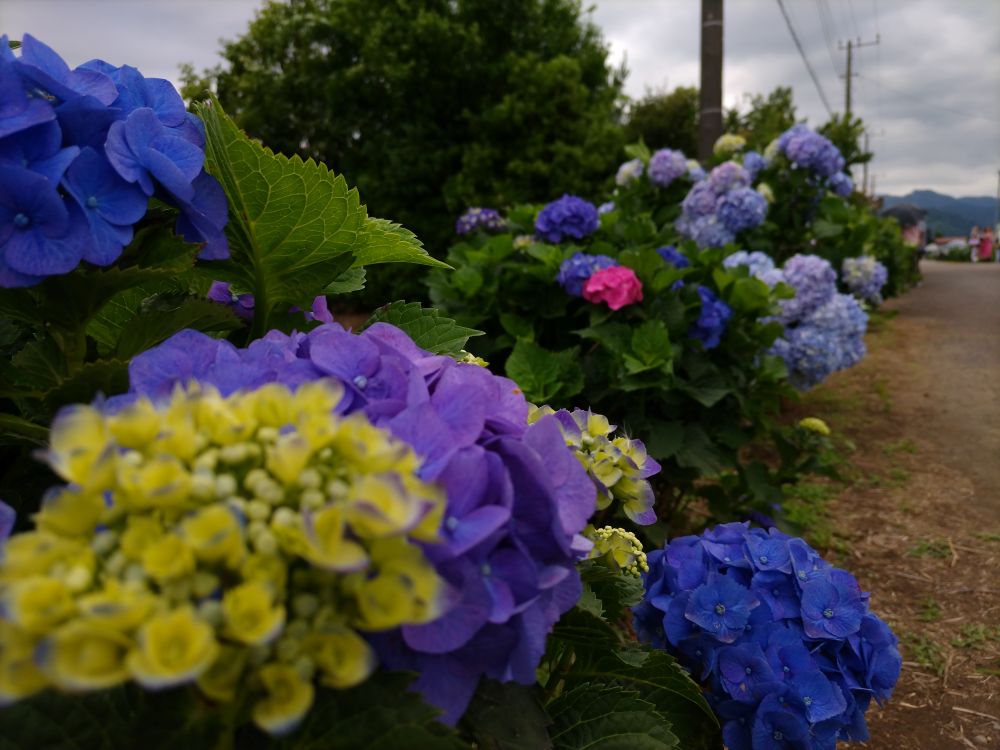
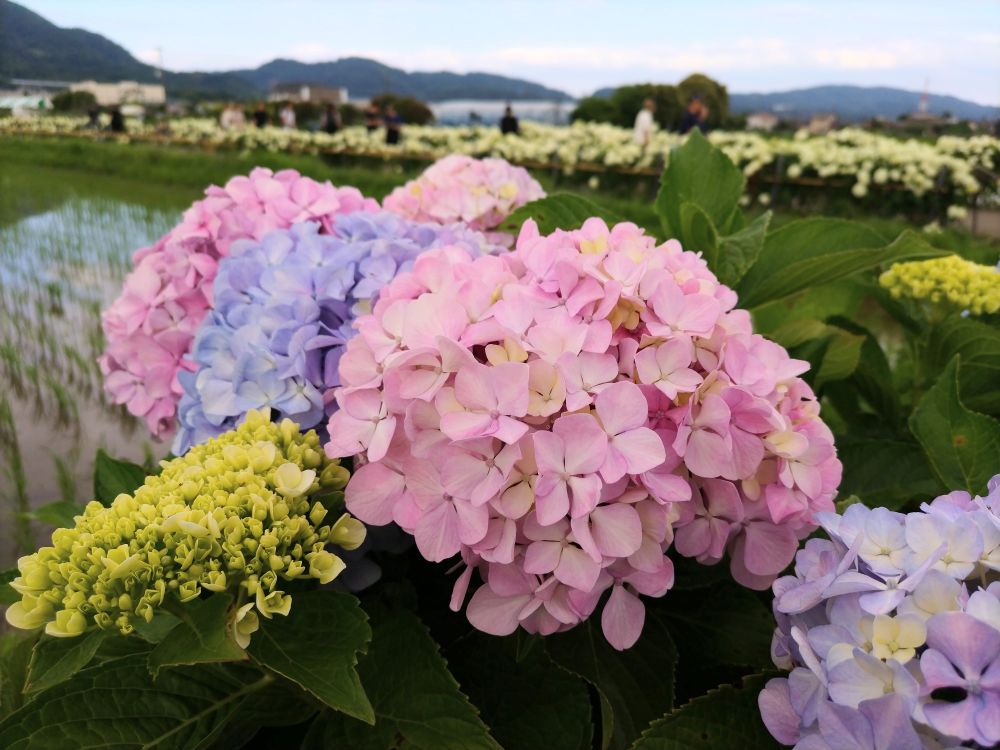
Kaisei’s hydrangeas are planted along the edges of rice fields and tea farms, creating a landscape that feels both traditional and slightly dreamlike.
Although hydrangeas naturally prefer shady, mountain environments, the residents of Kaisei have carefully adapted and cared for them so they can thrive in this sunny, open farmland.
The flowers are grown and maintained by local volunteers, giving the entire area a warm, community‑driven charm.
The Special “Kaisei Blue”
Japan is famous for its cherry blossoms, but many regions also have their own symbolic flowers.
For Kaisei Town, that flower is the hydrangea.
Among the varieties grown here, the most unique is Kaisei Blue, a locally developed hydrangea found only in this area.
Kaisei Blue begins almost white, then gradually shifts to pale blue and finally deep blue, with subtle shades of yellow and purple in between.
This gentle color change reflects the careful attention of the residents who grow and maintain the flowers.
Food Stalls and Floating Hydrangeas (Festival‑Only)
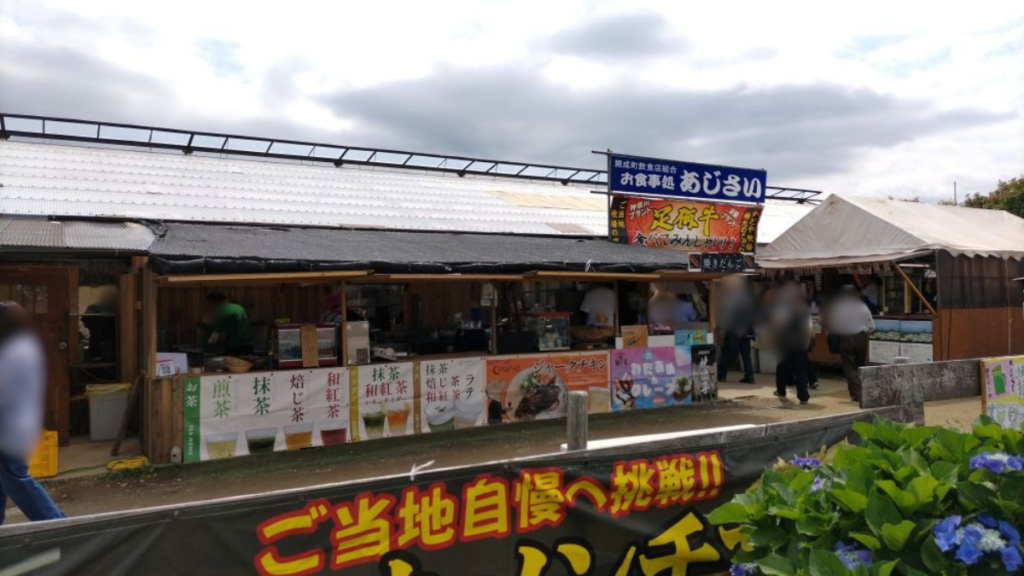
During the Ajisai Festival, small food stalls and local farm‑produce stands appear along the route, offering snacks and seasonal treats.
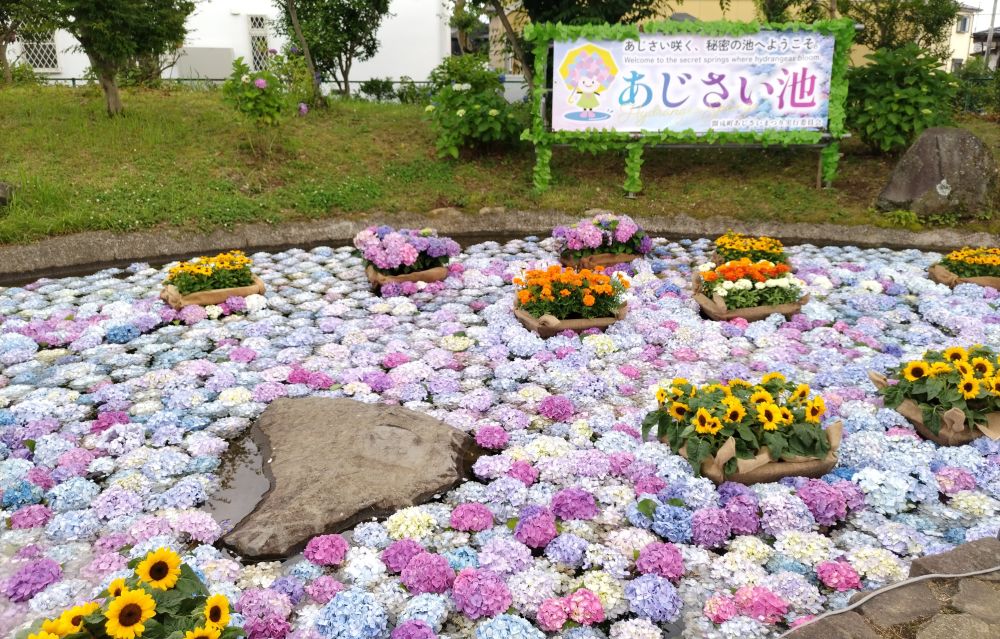
At the main Ajisai Park, you can also take beautiful photos of hydrangea blossoms floating on the pond—a festival‑only display that feels almost magical.
Side Trip: Seto Residence
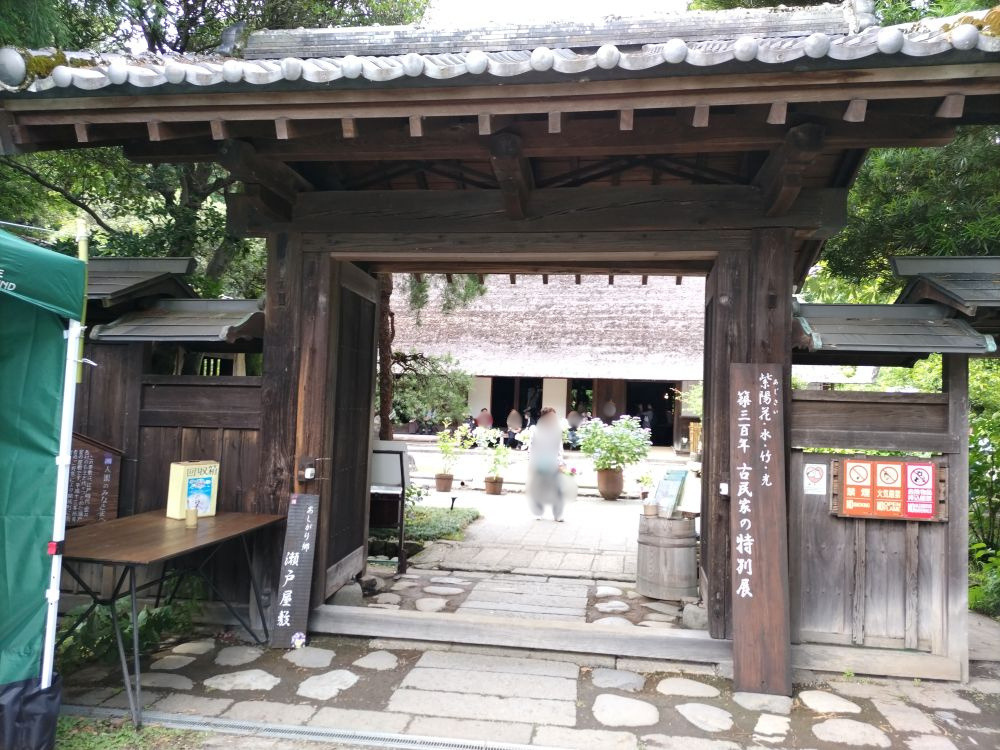
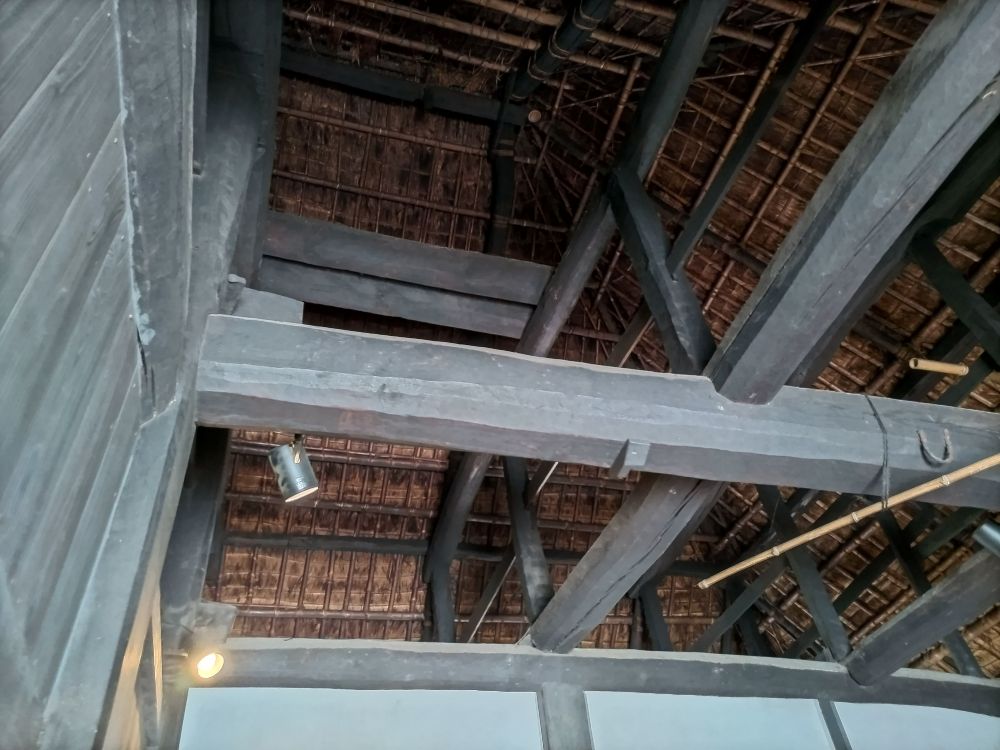
About a 12‑minute walk from Ajisai Pond, Seto Residence is a 300‑year‑old traditional house once owned by the local village head.
It hosts seasonal events, but even on quiet days, the architecture and atmosphere are worth a visit.
During the festival, you may receive a discount ticket at the station. (Example: 300 yen → 200 yen)
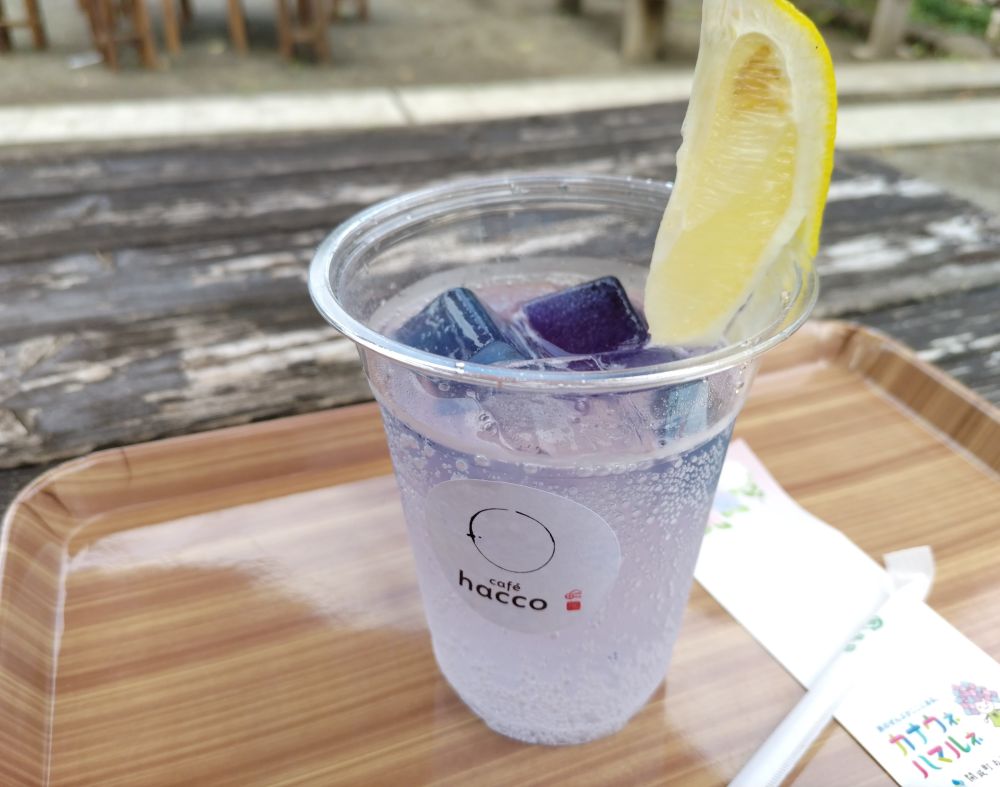
Inside the grounds is Café hacco, a small café where you can rest.
Their “Ajisai Cider,” made with butterfly pea tea, changes color from clear to purple—perfect for the season.
Festival Tips (Very Useful for Foreign Residents)
- Go early if you want food or local snacks—many sell out by afternoon.
- Please do not touch the hydrangeas or other plants. They are carefully maintained by local residents.
- Please avoid touching historic buildings such as Seto Residence. Many structures are protected and easily damaged.
- Stay on the paved route—the rice field edges are off-limits.
- Bring cash for small purchases; not all stalls accept cards.
- Check the official website for festival dates and shuttle bus times.
- Photography is welcome, but be mindful of private farmland.
Why Kaisei Is Worth Visiting
Kaisei Ajisai-no-Sato isn’t just about flowers.
It’s the feeling of walking through open countryside, surrounded by mountains, rice fields, and the gentle colors of hydrangeas.
It’s the kindness of the volunteers who greet you, guide you, and wave goodbye as your bus leaves.
And it’s the quiet beauty of everyday life here—the way the landscape and the people who live in it blend so naturally—that makes you want to come back again.